phanaerozoic

Musings about life on Earth in all its aspects…

Maybe you had to go…

Maybe you had to go, finally. Those months hadn’t been easy. You would tell us how your toes curled when the nurse took bone marrow from your ribs with a needle and syringe. It was just like you to make light of the most dreaded but commonplace part of your days. I remember reading you articles I had written for my high school newspaper, sitting in the waiting room waiting for them to bring you back from a lab, looking out your window at the factory-like austerity of the hospital building while you napped. St. Louis was not a place for any of us. We belonged to the small towns we lived in and the farm fields that surrounded us. We should have been out running trot lines, cleaning catfish, hoeing weeds from rows of beets, picking peaches with juice running down our chins.

We had just finished up sawing the slab ends we had hauled from the sawmill and stacked them in the shed the day you got the call. We had cut enough wood to get us through the winter, and we should have felt content, confident ready for the cold wind and snow. Then Doctor Wilson on the phone. I remember you and mom going into your bedroom for a long time after you had talked to him. You came out and tried to explain what was happening to us, but we had never even heard the word leukemia before. And no encyclopedia entry could have prepared us for what the word really, truly meant: Mom’s red-rimmed eyes; the both of you gone for weeks on end, you in St. Louis, the three of us at home with grandma; the nights we would spend hours on the phone calling your friends and asking if they would go to St. Louis and give blood for you.

By spring everyone was exhausted, you of course, most of all. The slightest sense of optimism was in mom’s face the day she came home and told us the hospital staff felt you had improved enough for her to spend the weekend with us. I had fallen asleep sooner than I usually did, the comfort of mom’s presence downstairs bringing peace that had been missing. So although uncle Bud’s knock and voice outside our door in the middle of the night woke me up, it was her crying that brought me out of bed, shaking, with tears already clouding my eyes.

I know that she wished she had been there to hold you at the end. But I think that you knew what was coming, and had seen so much of her love those last months together that you wanted to spare her from seeing your final pain. I think that you wanted at the end to be by yourself, knowing that we who loved you were together in the home you had made for us, the place you longed to be but could no longer share. I think when you finally had to go, you knew you weren’t really alone at all.

– Roy Beckemeyer, 9 July 2013, Memoir Essay written as an exercise for an on-line class, “Seasons and Cycles: Sense of Place, Writing and Healing,” taught by Kansas Poet Laureate Emerita, Caryn Mirriam Goldberg. My father died of leukemia in 1958 at the age of 43, when I was 16 years old.
(http://www.tlanetwork.org/online-courses/seasons-and-cycles-sense-of-place-writing-and-healing/ )

When I Was Eight Years Old …

for Martin Richard

… a pressure cooker helped
to make sure the green beans
were still good to eat
when we plucked them from
the cellar shelf in the middle of winter,
and nails were used to hold up walls
and ladders to tree houses on high limbs,
and signs that said
“Lemonade – 5¢”…

– Roy Beckemeyer, April, 2013

Links to Some of My Poems that Can Be Found on the Web

Since I now have poems and/or bits of poems scattered around on a number of sites on the web, I decided to gather the links and post them here to them all in one place. (Note that web links often have really short lives, so if you want to have a record of your poetry as published on-line, you might want to try saving the web page to your computer. This can be done in either html form or if you have Adobe Acrobat, you can often save a nice version in pdf form.) I also have several blog entries here on phanaerozoic devoted to poems, so be sure and look them up as well. Just click the tag “Poetry” under “Categories” to see all my blog entries that include poems.

These are roughly in chronological order of posting to the web, and at the time of this posting to phanaerozoic, all are active links:

At my personal web site, windsofkansas.com, there is a page that links to a number of poems: http://www.windsofkansas.com/poems.html

The individual poems are:

“Picking (2)” (posted October 12, 2001)
http://www.windsofkansas.com/picking.html
“Alaskan Food Chain” (posted October 12, 2001)
http://www.windsofkansas.com/alaskan.html
“Trailside Ecology Lesson” (posted October 12, 2001)
http://www.windsofkansas.com/trailsid.html
“On the Prairie At Dawn” (posted October 12, 2001)
http://www.windsofkansas.com/onthepra.html
“Quail Dog” (posted October 12, 2001)
http://www.windsofkansas.com/quaildog.html
“Dragonflier” (posted October 12, 2001)
http://www.windsofkansas.com/drgnflyr.html
“Ode to Erpetogomphus lampropeltis ovipositing in a Gila River Riffle” (posted October 12, 2001)
http://www.windsofkansas.com/ode.html
“Rebirth: Thoughts on Observing Dragonfly Larvae” (posted October 12, 2001)
http://www.windsofkansas.com/rebirth.html
“A Fortnight into Autumn, Dreaming” (posted April 8, 1996)
http://www.windsofkansas.com/owl2.html

On Tom Mach’s Blog, “Prose and Verse World”

Five “Machadaiku” poems – a form invented by Tom (posted May 19, 2011):
http://tommach.tumblr.com/post/5635318540/machadaiku-poetry-another-contribution
“Impressionist” (posted May 22, 2011)
http://tommach.tumblr.com/post/5732611388/impressionist-a-poem-by-roy-beckemeyer

At Greg German’s “Kansas Poets” website (http://www.kansaspoets.com/index.htm):

“In Kansas to Stay”
http://www.kansaspoets.com/ks_poems/Kansas%20Poems%20-%20Page%205.htm

At the web site of Kansas Poet Laureate (2009-2013) Caryn Mirriam-Goldberg, “150 Kansas Poems,” I was fortunate to have four poems chosen, the first two for her “Begin Again: 150 Kansas Poems” project in honor of the Kansas Sesquicentennial, one for “To the Stars Through Difficulties: A Kansas Renga in 150 Voices,” and one as “Poem of the Week.”

The first three are cached at:
http://150kansaspoems.wordpress.com/tag/roy-j-beckemeyer/ and are:

“A Kansas Farmwife’s Snow Song” (posted November 19, 2011)

134. A Kansas Farmwife’s Snow Song


“We Discuss the Geomorphology of Life” (posted April 5, 2011)

43. We Discuss the Geomorphology of Life


and from the renga (untitled, posted Feb. 5, 2012):

14. To the Stars Through Difficulty: Roy J. Beckemeyer

The fourth is the poem of the week posted February 11, 2013:

“Kasantatieh”

Ka·Santatieh by Roy Beckemeyer

Films, Stories and Poems Exhibited at the Percolator (A Multi-media Art Venue in Lawrence, Kansas) – The Story of Chickens (http://rocketgrants.org/2012/03/07/call-for-submissions-3/) by Amber Hansen Exhibited March 30 – April 21, 2012. Posted by The Story of Chickens on July 7, 2012:

“A Five-Tanka Poem: Where Food Came From in the 1950’s” (posted July 7, 2012)
http://rocketgrants.org/2012/07/07/films-stories-and-poems-exhibited-at-the-percolator/#jp-carousel-4328

At The Journal of Kansas Civic Leadership, Julia Fabris McBride, Poetry Editor, Chris Green, Managing Editor, Wichita, KS,
(http://issuu.com/kansasleadershipcenter/docs/thejournal.issuu) published in November, 2012 issue, p. 104-105:

“Hope” (posted November, 2012) – use above link, open issue and page to poem near end of issue

At the web site of Lisa M. Hase-Jackson, “200 New Mexico Poems”
(http://200newmexicopoems.wordpress.com/), in honor of the New Mexico Centennial:

“A Day at White Sands” (#193, posted December 13, 2012):
http://200newmexicopoems.wordpress.com/category/roy-beckemeyer/

At the blog, “Zingara Poet,” edited by Lisa M. Hase-Jackson (http://zingarapoet.net/), the Poem of the Week for February 6, 2013:

“The Baltimore Catechism: Unrequited Love”

The Baltimore Catechism – Unrequited Love by Roy Beckemeyer


Untitled: “Is the harvest moon swollen…” Response to Zingara Poetry Prompt for January 18, 2013 (posted February 20, 2013)

Questions Poetry Prompt


Untitled: “morning light grazing fields…”: Response to Zingara Poetry Prompt for February 15, 2013 (posted February 19, 2013) Zingara Poetry Prompt for January 18, 2013 (posted February 20, 2013)

Friday Poetry Prompt


“You, Approaching”: Response to Zingara Poetry Prompt for February 22, 2013 (posted February 22, 2013)

Fun with Similes Poetry Prompt

At the web site: The Shine Journal – The Light Left Behind: Journeys Through Grief (http://www.theshinejournal.com/) (Added to this list on 26 April, 2013):

Three Poems: “To My Brother on the Anniversary of Our Father’s Death,” “Maggie,” and “Elegy for Our Father” (http://www.theshinejournal.com/beckemeyerroy.htm)

– Roy Beckemeyer, 16 April, 2013

ANTARCTIC JOURNAL – 1998 – DECEPTION ISLAND

In the Antarctic, krill, which means ‘whale food’ in Norwegian, sustain not only whales, but also penguins, seals, squid, fish, albatross, and other seabirds. These small, shrimp-like creatures represent the very cornerstone of the Antarctic ecosystem — processing the energy of the sun stored in phytoplankton (microscopic free-floating plants) and breeding by the thousands to provide an abundant source of nourishment for higher-order predators. Virtually all the larger animals of the Antarctic are either directly or indirectly dependent on krill.” – from Krill: Cornerstone of the Antarctic, PBS.org

From my journal:

“Chinstrap Penguins at Bailey Head stream up the slopes in a continuous river of movement: swirls of penguins, freshets of penguins, long sweeping arcs of penguins, occasional eddies of penguins that hesitate briefly before continuing on.

Chinstrap 1

I point the viewfinder of my video camera into this chaos of penguins, then zoom in to focus on a square meter of black sand. I can cope with this small patch, analyze it just as I would a fluid flow problem. Establish a fixed reference volume and measure what goes in, what goes out. Thirty-eight penguins pass through my little box in two minutes. That’s nineteen penguins per minute per meter. The penguin stream here is about six meters wide. One hundred and fourteen penguins per minute passing this point, flowing uphill, uphill. Uphill to the chicks.

I change experimental techniques. One can also study flowing fluids by tracking the path of individual particles within the flow. I pan the camera back to the source of penguins, the rolling swells at the beach. Catch a knot of penguins at the water’s edge. Choose one. Watch the swell sweep it up onto the beach. It stands erect and steps. Step, step, step. Halt. Shake. Joins the flow: step, step, step. The penguin particle traces a path, a penguin streamline, up the beach toward the colony.

At this time of day, the net flow of penguins is uphill. Occasionally individuals or small groups can be found bucking the tide, going down toward the sea. Perhaps one in forty, one in fifty. Also going down the hill is a small stream of fresh water. The sea below penguin colonies seems always to be tinted, muddy, reddish, murky with suspended sediments of earth and guano: guano dyed pink with krill colors, organic krill dyes.

krill

Krill fuel this system, provide the energy that pushes this flow of penguins uphill in defiance of gravity. Step, step, step. Each footstep like a meshing gear tooth in a machine. Lifting krill soup, krill stew. Kilocalories of krill being carried up in discrete penguin packets, levered up the hill step by step.

I first sit on the sand, then move to a rock further up the slope. I use my brain as a signal processor, filtering out the squawks, creaks and groans of penguin vocal cords. Filter out the rolling swish of water onto the beach. I focus on the background sound, the stepping sounds, the almost sibilant slapping of feet onto the ground. Step, step, step. The quiet, insistent background sound of energy going uphill, always uphill.

Chinstrap 2

I go with the flow. Climb the hill myself. The stream of penguins opens, parting to form a tear-drop shape of penguin-less space around me, as if I were a boulder in the stream. As I top the hill the stream begins to lose its identity, to diffuse, to disappear into the melee of the colony. Here raucous groups stand in the sun on the rounded slopes above the beach. Chicks beg for food, insistently pecking at adult bills. The chicks are of course the reason for all the commotion, all the movement, all the flowing river of black and white that stretches back across the sand into the distance. The penguins in the distance are barely distinguishable, but their rocking, pendulum-like motion looks like ripples on water, like the fine-grained capillary waves that dapple otherwise calm seas. Each roll, each bob represents a step. Step, step, step. Nearly countless feet taking nearly countless steps, right, left, right, left, a sound like light rainfall. As time passes and my memories of Antarctica fade, I know that it will be the memory of these soft sounds of penguins stepping slowly, steadily up the slopes of Bailey Head that will make this precious moment real for me once again.”

– Roy Beckemeyer, Deception Island, South Shetlands, January 31, 1998.

ANTARCTIC JOURNAL – 1998 – THE DRAKE PASSAGE

“I now belong to a higher cult of mortals, for I have seen the albatross!” – Robert Cushman Murphy, Logbook for Grace

From my journal:

“God seems to have graced some living things more abundantly than others. He was particularly generous to pelagic birds. Our days between Ushuaia and South Georgia on the open waters of the South Atlantic Sea provide ample evidence of this.

Storm Petrels are a case in point. They dash across the sea like frenzied ice skaters, like Bolshoi dancers. They stop in place and dap their toes into the water like ballerinas en pointe. They careen off again, rolling back and forth, back and forth. Watch them closely enough, long enough, with sure and agile enough tracking, and they will reveal their identity by way of their belly plumage: dark for Wilson’s, white with a black streak for Black-bellied.

Wilsons StormPetrel Photo Filtered

But it is the stiff-winged albatrosses that to me best reveal the sea birds’ special grace. The first species we encounter is the lovely Black-browed, with its snowy white head and stunning black stripe through the eye. These birds wheel and glide behind the ship showing off their natty black and white plumage from all angles. Later we see Light-mantled Sooty and Gray-headed Albatrosses as well, each with equally pretty plumage. They are much rarer than the seemingly ubiquitous Black-browed, however, and for that reason seem more precious.

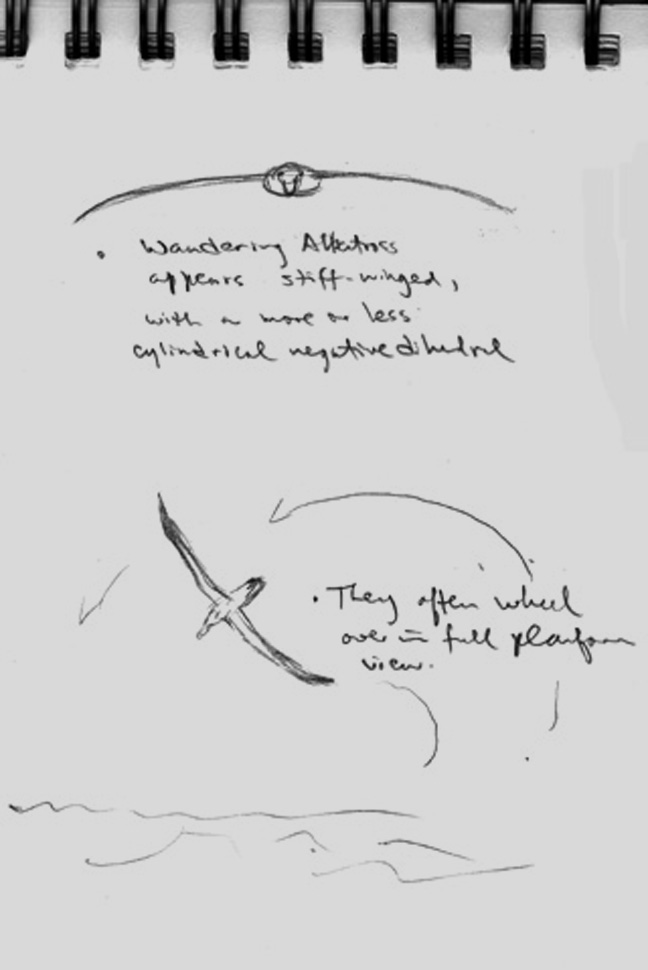
Wandering Albatross Quick Sketch

Soon the Wandering Albatross appears. We see mostly immature birds of this species, which even in the adult plumage is somewhat drab when compared with the other albatrosses. But this bird’s blessings are not cosmetic, not skin-deep. The Wanderer possesses unimaginably efficient wings. Wings capable of keeping the bird airborne day after day after day, almost never needing to be flapped. Wings sensitive to the slightest nuance of wind, of updraft, of gradients in the boundary layer. This species’ grace and beauty are functional, structural, geometric, aerodynamic. This bird is the consummate flier, with slender sail-plane like wings that can bring tears of joy to the eyes of an aerodynamicist.

Wandering Photo

Occasionally bestowing on us a close look as they glide over our heads, these huge birds with their eleven foot spans more often skim the wave tops one or two hundred meters away. They are nearly always within sight of the ship, but not tethered in its wake like their molly-mauk and petrel cousins.

Wandering ALbatross SKetches

I have dreamed of seeing the Wandering Albatross for years, since reading The Rime of the Ancient Mariner as a child. My desire only intensified when I became an engineer and read the works that document the astounding feats performed by Diomedea exsulans. In 1964 Clarence Cone of the Virginia Institute of Marine Science published a mathematical analysis of the energetics of dynamic soaring that showed albatrosses to be the original wind machines, able to extract energy from wind and wave with the clarity, precision and unerring control with which they maintain their attitude and position in time and space.

Cone Analysis SKetcvh.

In 1982 Colin Pennycuick made field observations of the gliding performance of the albatrosses of South Georgia and quantified their impressive performance. P. Jouventin and H. Weimerskirsch tracked Wandering Albatrosses using satellites in 1990 and determined that the birds made foraging flights away from their nests of from 3 to 33 days that covered from several thousand to 15,000 kilometers. Credible documentation of incredible feats.

Now I stand at the stern of the Akademik Ioffe, shifting my weight from leg to leg as the ship lifts and rolls on the swells of the Drake Passage, the wind whipping my cheeks with spume plucked from white-fringed waves. The surface of the sea is almost alive, in constant motion. I stand and watch them: Real albatrosses. Live albatrosses. Albatrosses sharing with me this position in time, this position in space, this raw and lovely intersection of nostalgia and reality.

Wandering Albatross Photo FIltered.

At the edge of the horizon a Wandering Albatross skims the waves. The swells reveal then hide, reveal then hide the bird. It suddenly wheels up above the plane of the water, dark against the leaden sky, showing me its perfect planform. The arc of its path brings it nearly vertical to the surface of the sea. There is a catching in my throat. The bird reaches across the water and captures a bit of my soul. I hold my breath. The bird hangs there in mid air. I have seen my albatross at last!”

– Roy Beckemeyer, Drake Passage, 22 January, 1998

My travel journal entries from a trip I made 15 years ago to Antarctica have long been posted on my web site http://www.windsofkansas.com. I have decided to extract some of them and post them here on my blog so that they are exposed to a different audience. The text and rough sketches are from my Antarctic Journal. The schematic diagram is from the cover of “A Mathematical Analysis of the Dynamic Soaring Flight of the Albatross with Ecological Interpretations,” by Clarence D. Cone, Jr., Virginia Institute of Marine Science Special Scientific Report No. 50, May 1964. The color images are from photos I took on the 1998 Antarctic trip and are of a Wilson’s Storm Petrel and two different Wandering Albatrosses. I used Photoshop filters to make the photos look like paintings.

1953 IN TANKA: A YEAR IN SMALL-TOWN ILLINOIS

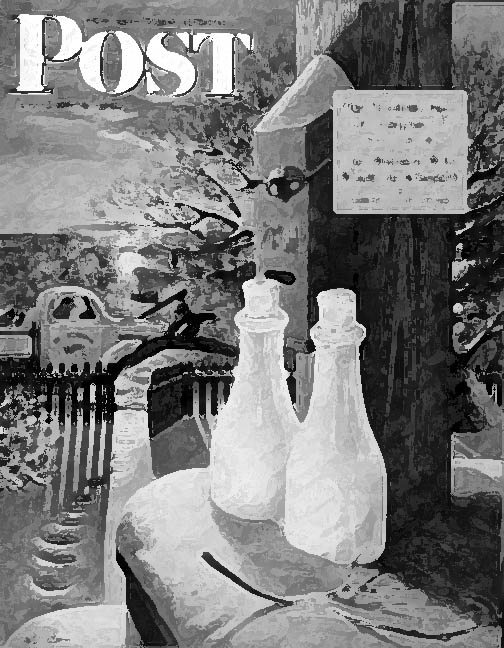
small town

January

frozen cream shoving
the cap out of the bottle –
whole milk of winter –
its icy Holstein essence
delivered fresh to the door

milk

February

skating on Shoal Creek –
ice cracks like a rifle shot
and transforms us both
from skaters into swimmers
huddled steaming by the fire

March

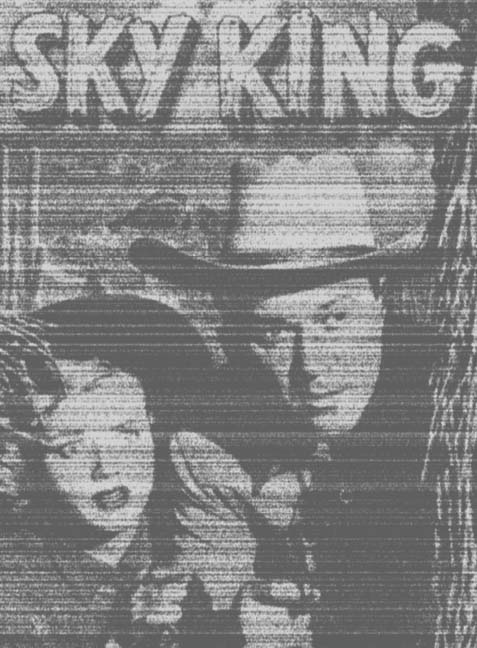
Sky King’s niece Penny
in that twin-engined Cessna –
Saturday mornings
twelve year old boys dream about
pony-tailed girls and flying

sky king

April

we always butchered
chickens for Sunday’s dinner
pinfeather plucking
wet feather Saturday smell,
blood spatters on the green grass

May

mimicking the nest
of an oriole, bee swarm
hangs high in the tree
tempting us, our burlap bags,
ladder, and hive box ready

bee

June

our mulberry hands
bloody from murdered berries –
the stigmata stain
confessing our transgression –
the sweetness still on our tongues

July

calcium carbide,
water – makes acetylene
and a coffee can
blows its top into the air –
our home-made Fourth of July

August

cassocked altar boys
serve Mass, their incense burners,
swinging pendulums,
measuring what time remains
with fragrant, even motion

apple tree

September

orchard’s green apples –
shake of salt tames the sour
bitterness of fall –
we can see our whole summer
from the high crotch of this tree

October

shelled corn and lye soap
the Halloween essentials
attacking windows
we dispensed tricks in protest
over treats never received

corn

November

we all ate rabbit
on this one Thanksgiving day
when cash was so scarce
two families’ hungry kids
were nervous as cottontails

December

penny on the track
B&O locomotive
barreling on through
this two bit whistle stop town
nothing ever happens here

train

Poem about growing up in a small town in Illinois. Images from my photos and some taken from the web and filtered with Photoshop.

Living On and In the Prairie

September, 1879

Dear Sister,

This land has no trees,
so we will take our house from the earth.
We are skinning the prairie we hayed last week,
removing the sod in slabs two feet long,
a foot wide, forty pounds a slab,
one slab at a time

sod

These blocks of soil are bound
by the tough, knitted roots of bluestem grass.
We carry each one by hand to our home site
and place it carefully along a string-line.

Forty-eight blocks to a tier, twenty tiers high,
almost a thousand sod bricks,
twenty tons of prairie,
will make the walls of our home.

Samuel’s back is bent by the weight of all that sod,
and he can barely stretch, snapping and creaking
as he pulls back his shoulders.

We will use our precious few boards and beams
to support the roof, another two hundred blocks of sod,
another half ton of earth.
We carry each heavy slab across the prairie,
lug it up the ladder, heave it into place.

October, 1879

Sleeping in the open or under canvas
has been by turns peaceful or frightening
as the prairie presented us with its many faces,
as it tested our resolve to live here,
and this new house of earth is strong,
comforting in its stolid mass.

We do not mind that it is a bit dark inside,
nor do we mind the faint scratching
of the grubs that live in our walls,
or the fair but constant songs of the crickets,
their simple harmonies accompanying
the ever present whisking of the wind
as it blows bits of leaves and dried grass,
dust and sand across the prairie.

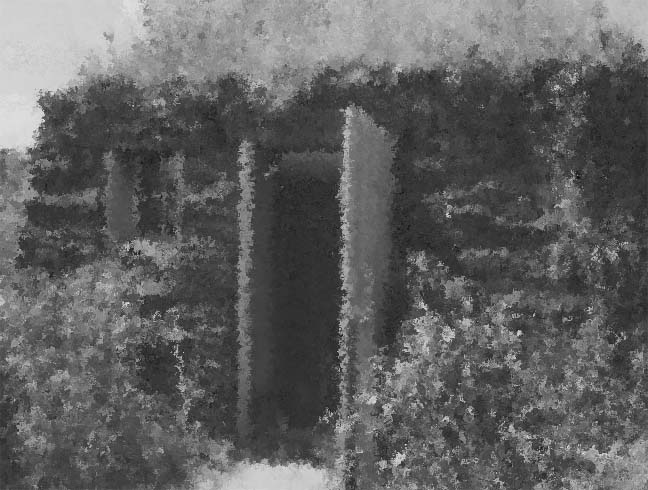
house

We have finally unloaded our belongings,
and the placement of our stove
is now announced by the stove pipe
jutting from the roof.
We sit around our table,
Samuel and I in our chairs,
Benjamin and Emma on their bench,
saying grace as the wind whips
the canvas shutters that not so long ago
served as our tent, our vagabonds’ home.

December, 1879

The mound of dried buffalo dung the children collected
is piled under the lean-to just outside the door,
and its earthy scent is now familiar, not at all offensive.
It keeps us warm and dry, lets us cook our food
and boil our water. God bless the bison.

The snow has drifted into place
and is now as high as the south wall.
The mules and cow stand, their rumps to the wind,
blindly chawing at the mound of hay
we pitched to them in the brief lull in the blizzard.

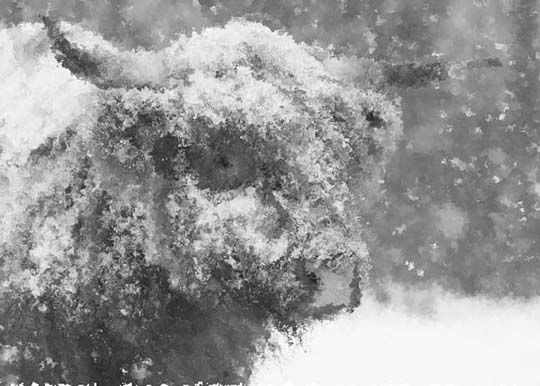
cttle

The thick walls of sod are frozen on the outside,
but warm to the touch in here.
Our earth home is blessing us and keeping us
as if its walls were God’s own hands.

April, 1880

It is spring and the roof has sprouted up
in flowers and forbs. Sprigs of airy grass
blowing in the wind make the house
appear lighter, adding a sort of grace to its mass.

spring

The prairie wind has blown over us all year,
as if this place was just another hummock on the prairie,
and now the whole prairie is newly, grandly green,
as is our home, sprouting and proud to have sheltered us
through the long and cold winter.

June, 1880

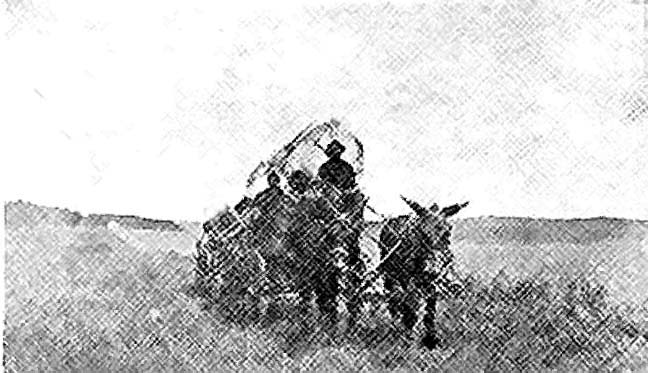
An itinerant photographer arrived last night,
announced by the jingles and jangles and tinkles,
clanks and clinks of his mule-drawn wagon,
and by his hoarse “Hallo the house.”

wagon2

After dinner he showed us tintypes he had made
of other prairie families, standing or sitting
in front of their earthen homes.
We recognized our neighbors,
the stern and sturdy Swensons,
and, from up in Russell County, the Chrisman sisters.

Samuel, ever the careful observer,
noted the wistful longing I tried so hard
to keep from showing; but something in my eyes
or in the set of my mouth must have given me away.

So this morning we posed here in our prairie yard,
carried our table and chairs out into the sun,
dressed in our Sunday best, warned the children
not to sit in the dirt or roll in the grass.
We tethered the mules and our milk cow
to one side, and I pinned up my hair
to keep it from blowing in the wind.

Samuel generously spent a second dime,
so that I could send this picture to you, dear sister.
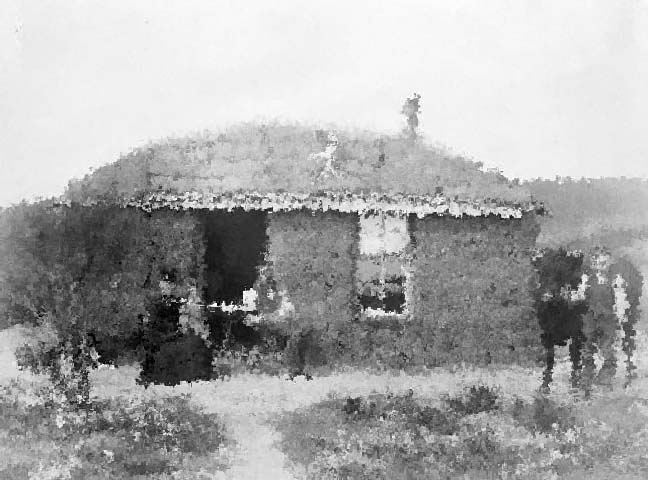
Here we all are. Here is our sod home.

house2

It may not look like much to you.
You are accustomed, after all,
to the frame houses and stone cottages
of St. Louis. But we have lived, safe
and protected for a year, now, in this,
our home on and in the earth,
where we live as one with God’s prairie.

Your devoted sister,
Martha Rawdings

In looking through old photos of sod houses on the prairie, I got to wondering what it would have been like to pull up stakes from a comfortable home in an eastern city and travel by wagon to the flatlands of Nebraska, Kansas, or Oklahoma to live in a house built of earth. This is the result: an imagined letter from a young woman to her sister, telling of her first year on the plains. The illustrations were based on old photographs posted on the web; I used various Photoshop filters and other digital tools to convert them into impressions rather than hard images.
© 2013 by Roy Beckemeyer

PHASES OF THE MOON

crescent

WANING CRESCENT, WAXING CRESCENT

From the upper cusp
Of the crescent moon
Three arcs descend,
Enclosing within their arms
Brilliance enfolding darkness,
Until,
Curving back upon themselves
They meet once more,
Cusped in closure, and complete.

gibbous

GIBBOUS MOON

Being not quite circular
In form,
The gibbous moon laments
Its imperfection, while
We observers simply smile.
With this moon we are content.
Our form
After all, is furcular.

furcular

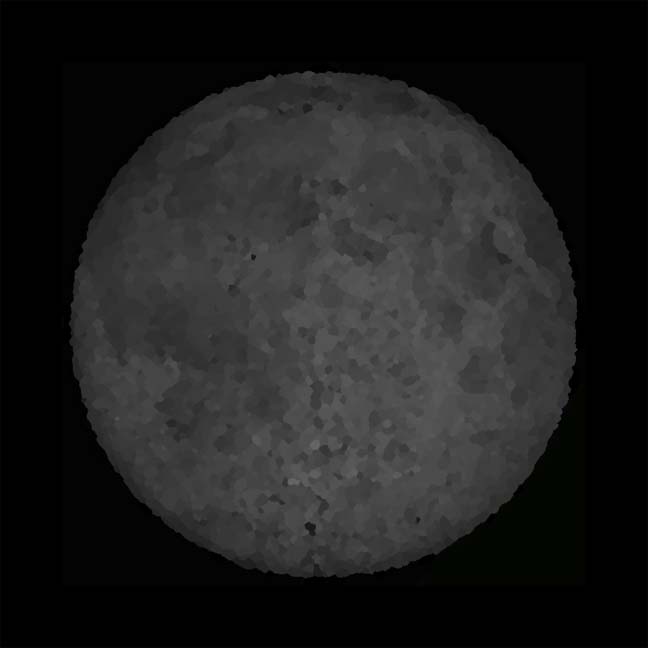
full

FULL MOON

God must have been
In a Jackson Pollock mood
When he was flinging
Meteors and asteroids at the moon.
I’ll bet he was pleased
At the effect
When the dense rock that formed Tycho
Splashed white debris
In that star-shaped pattern
Of rays across
The moon’s pock-marked
Adolescent face.

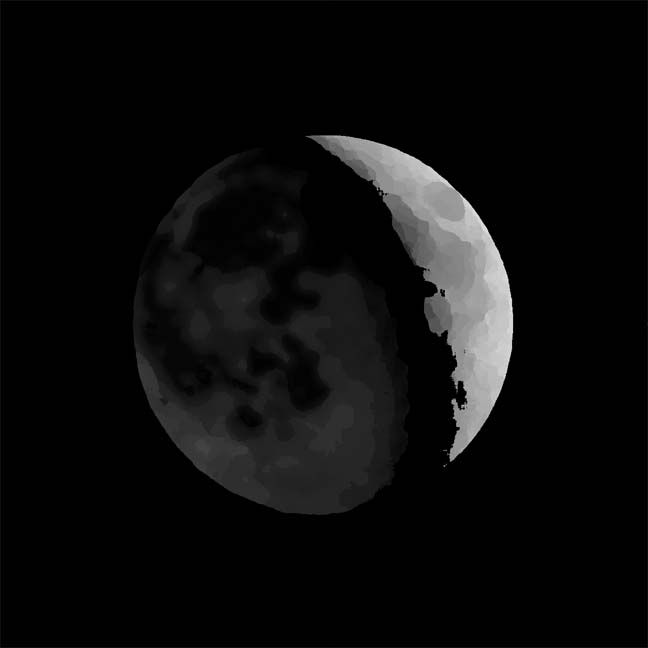
newmoon.

NEW MOON

Hiding in the earth’s shadow
The moon sighs in relief
As it gets to close its eye
All the way for a change.

COYOTE MEMORIES

1.

In a winter cantonment near Council Bluff, on the west bank of the Missouri in the fall of 1819, scientist and explorer Thomas Say tried to collect specimens of the species of ”prairie wolves” that he would name Canis latrans, Latin for “The Barking Dog.”  He and Mr. Peale, his assistant, tried many kinds of traps, with many kinds of baiting, but failed over and over.  They said that this animal had “wonderful intelligence.”

The coyote is clever and cunning.
To get to know him, go to Oklahoma.
Lie on the ground along those red banks
that the Cimarron cut in days
when it was an energetic youth
of a river, then make a sound
like a dying rabbit.

It is best on a cold October night
when Orion’s belt is pointing his path
through the sky and his hunting dogs
frolic and course around him
and the dog star, Sirius, binary eye
of the Hunter’s big hound,
glows and glitters.

2.

Live traps and cage traps and steel traps were no good.  In the end Say caught his specimen in a log trap baited with the body of a wild cat.  The coyote was three feet and nine and a half inches long, and a foot of that was tail.  The dead animal’s pelt was “Cinerous or gray,varied with black above, and dull fulvous, or cinnamon” in color.

I remember climbing down
into a cut bank cave above a bend
of the river and finding the perfect skull
of a coyote pup, so long on the dry ground
that it was as white and clean
as a dead, dry cottonwood branch.

The moon was rising out of the gully
and a family of coyotes had just begun
yipping and howling
and I felt as if I had disturbed
a shrine to missing coyote children.

3.

Say’s dead coyote had hair that was at its “base dusky plumbeous, in the middle of its length dull cinnamon, and at the tip gray or black.”  Its ears were four inches long and “…erect, rounded at tip, cinnamon behind…inside lined with gray hair; eyelids edged with black, superior eyelashes black…iris yellow; pupil black-blue…”

I once watched a coyote mother look up
from a meadowlark nest,
ears and stance all at attention,
yolk dripping from her muzzle,
her fur ruffling in the morning wind,
her yellow eyes unblinking, as if she was
Canis major come to earth,
bright eyes reinvented to flavescence.

4.

“The prairie wolves roam over the plains in considerable numbers, and during the night, the principal season of their hunts, they venture very near to the encampment of the traveler.”

One night I came suddenly
awake in my tent to the midnight
chortling chorus of coyotes.
I pulled my sleeping bag up
around me, as their plangent call
and response set the hairs on my neck
to bristling.  My dog was sitting at attention,
staring into the black night,
and I reached out my hand
to stroked his quivering neck.

Together we listened
to the prairie wolves declare
their ownership of the night,
their principal season,
while overhead Orion quietly
climbed into the sky,
stalking the moon across
the high heavens of Oklahoma.

Quotes are taken from Early Western Travels 1748-1846.  Volume XIV: Part 1 of James’s Account of S. H. Long’s Expedition, 1819-1820, by Rueben Gold Thwaites, The Arthur H. Clark Company, Cleveland, Ohio, 1905, and are directly from the Long Expedition Journals and Thomas Say’s Notes.

A POET’S WEEKEND IN THREE MOVEMENTS

BAGATELLE – “… a short piece of music or verse in a light style” – Merriam-Webster Unabridged Dictionary

Notes1

On Friday morning, March 1, 2013, I received the very welcome news that a haiku of mine had been accepted by editors Scott Wiggerman and Constance Campbell for their forthcoming anthology, “Lifting the Sky: Southwestern Haiku & Haiga,” to be published by Dos Gatos Press (http://dosgatospress.org/ ) of Austin, Texas. A quite pleasant way to enter the weekend and a warm-up that got me humming and in-tune for the scheduled events to come.

A brief INTERMISSION to move to a new venue: my wife, Pat, and I drove from Wichita to Emporia, Kansas (about 90 miles) for Friday night’s reading from Kansas Poet Laureate Caryn Mirriam-Goldberg’s “To the Stars Through Difficulties: A Kansas Renga in 150 Voices” (http://150kansaspoems.wordpress.com/readings/). Some of the poets who had contributed poems to the volume met at Casa Ramos, a nice little Mexican restaurant in Emporia for ceviche, burritos, flautas and other flavorful and spicy Mexican fare.

SINFONIA CONCERTANTE – “a concerto for more than one solo instrument” – Merriam-Webster Unabridged Dictionary

Notes2

The renga reading was held at Emporia State University and hosted by Kevin Rabas of ESU (http://www.facebook.com/roy.beckemeyer#!/events/266004003528732/) . Kevin’s professorial prowess and poet’s panache resulted in a quite satisfying evening; he attended to the little extras that make a big difference, such as posting students and staff members at various locations in the student union to direct attendees, having a nicely arranged room, refreshments, tables for displays of books, and a warm and receptive audience.
Kevin first introduced Kansas Poet Laureate Emerita Denise Low and current Laureate Caryn Mirriam-Goldberg, both of whom talked and read some of their work before the renga reading began. A number of the poets at this reading had ties to Emporia and ESU, which helped to make the event even more special. As different poets show up at different readings, the tenor of the renga changes each time. An interesting aspect of this reading was that there were two husband-wife couples and a father-son pair among the 12 poets who read. The poets read in the order in which their poems appear in the renga; most of them quoted from the poem that immediately preceded theirs in the book and that provided the inspiration for their poem. Reading were: Caryn Mirriam-Goldberg, Hazel Smith Hutchinson, Bill Sheldon, Roy Beckemeyer, Kevin Rabas, Denise Low, Ken Lassman, Pat Beckemeyer, Shawn Pavey, Dan Pohl, Cheryl Unruh, and Tyler Sheldon. Audience members were attentive and interested, and the reading was a delight for the poets. The ambience remained warm and friendly afterwards, with lots of dialogue and discussion of poetry.
Thanks so much to Kevin for managing the event, to Caryn for shepherding all those poets through the process of bringing the renga to fruition and for turning it into a manuscript, and to Denise for publishing the book as part of Mammoth Publications’ rich catalog (http://www.mammothpublications.com/).

A second INTERMISSION, as Pat and I drove back to Wichita the morning of Saturday, March 2, 2013, for the final event of the weekend. A beautiful sunny day for a drive through the Flint Hills, which still had a blanket of snow covering the grass from last week’s storms, made the trip delightful.

CHACONNE – ” a musical composition…consisting typically of continuous variations based on a repeated succession of chords ”

Notes3

We arrived back in Wichita just in time to drive to the March meeting and brunch of the Wichita Branch of the National League of Pen Women (http://www.nlapw.org/). Evelynn Boal and Dee Smith had invited me to do a program on the topic: “What Prompts the Poet.” As you might guess by now, to get a poet to do anything, you must feed him/her. After breaking our fast with quiche, pastry, fruit and coffee, I proceeded to the program. I had assembled a list of topics that I felt were good prompts for poets, discussed them briefly, then asked audience members to choose one of the prompts, and I responded by reading a poem of mine that had that prompt as its origin. At the completion of the program, they were gracious enough to invite Pat to read as well; she presented her renga poem – a nice ending for a weekend of food and poetry.

– Roy Beckemeyer