phanaerozoic

Musings about life on Earth in all its aspects…

NineElevenTwoThousandOne

Some images linger.

My youngest grandson, three days old, held the promise of the future. But the television screen and the commentators’ stark voices seemed to belie that future. Telephoto lenses focused on distant buildings, surreal against the blue September sky, smoke roiled from the blemished skyscrapers, and I couldn’t swallow, a bolus of bile and heartache stuck between gut and head. This can’t be happening, this can’t be happening. This can’t be.

And then I saw the first one. a bird dropping from a window ledge? No, it didn’t fly, it just fell. A piece of debris? Then another. My God, those are people falling through September skies. September is for falling leaves, smoke from burning leaves, waves of birds beginning to migrate south. Not for this.

_________________________________________________________

My grandson turned sixteen three days ago. He plays football beneath blue skies, walks through school hallways with his friends, still holds all that promise. May his September skies be forever free of lives ending in free-fall. 

_________________________________________________________

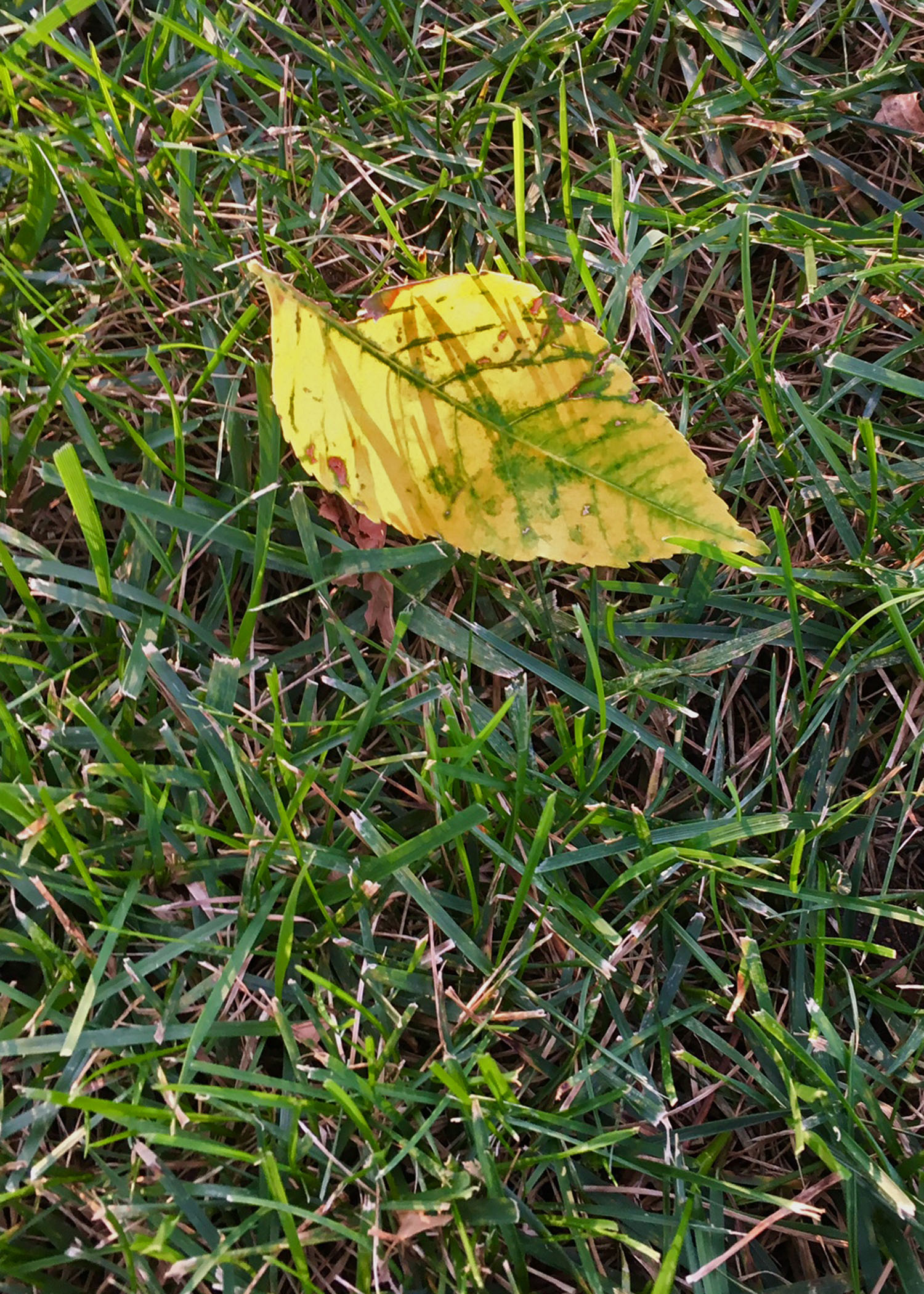
September Prayer

Lord, let me end things
like the leaves, in a burst
of all those bright
colors that have been
hidden inside me
the whole long
summer of my life.

I would like to let go
like a dry petiole,
fall like a leaf so dry
and light the air
will barely ripple
at my passage.

I would wish to float
aimlessly for a while,
my spread arms
and legs giving me loft,
a tendency to skitter
on the slightest
breeze, so as to defy all
predictions as to where
and when I would,
finally, come to earth.


~Roy Beckemeyer, September 11, 2017


_________________________________________________________


For the victims of 9-11 and those who remember them. And for John and his generation.


September Segue

A week into September and fall sneaks in a hint: small yellowed leaves drifting from trees in ones and twos and threes so intermittently that they almost don’t register.

They might as well be the sulphur butterflies, flitting goldfinches.

Everything else, after all, is still vibrantly verdant; the shades of green multitudinous, the number of leaves converging on infinity. Then comes the morning when you step out the door into a new 5:00 a.m., one that is bracing, the air still yet brisk, the world suddenly sharper, more clear; Venus hovers in the east, honed to brilliance.

By afternoon and on into evening the cicadas will continue to have their monotonous say, squelching all our preconceived notions about the harmonies of Eros. And so we balance here for a while, in this time both of and between summer and fall: the harvest moon still weeks away, baking-hot afternoons still a distinct possibility; yet the world is winding down, turning summer’s abundant and almost astounding fecundity down from a full boil to a slow simmer.

~ Roy Beckemeyer, September 8, 2017


My Interview by Miranda Erickson Kendall of the Topeka Shawnee County Public Library

Thanks to Miranda for her interviewing skills.

Here is a link to the interview:

https://tscpl.org/books-movies-music/roy-beckemeyer

Please join me and Leah Sewell on April 26, 2017 at the Topeka Shawnee County Public Library’s Poetry Month event.


Roy Beckemeyer, April, 2017

IMG_0038

An Ekphrastic Poem:

THE ANGEL OF DEATH’S PENANCE

After Oleksa Novakivsky’s painting, “Angel of Death,” 1923

He clasps the setting sunpic%5cn%5co%5cnovakivsky-oleksa-angel-of-death-1923

between icy wings, makes

of it his halo, sets his face

to shade, offers to his Creator

the body of yet another wingless,

mortal man, searches with averted

eyes a numinous end to the

endless path by which he will

one day part  from this, his

own private Purgatory.


  • Roy Beckemeyer


“Angel of Death,” 1923, an oil painting by Ukranian Artist Oleska Novakivsky, (1872-1935)

Notes from the past – posts moved from my “Music I Once Could Dance To” WordPress site – from July 24, 2015

I was thrilled to be notified by Lindsey Martin-Bowen that she had reviewed my first poetry book, “Music I Once Could Dance To,” in goodreads.  I am including here a link to the original review, and I have also, with her permission, pasted the review here.Thanks, Lindsey. I feel humbled and honored to have had these words penned about my book. Bless you.

ORIGINAL REVIEW On goodreads LINK HERE.

Lindsey’s review Jul 23, 2015
5 of 5 stars
Read in July, 2015

Review: Beckemeyer, Roy J. Music I Once Could Dance To.
Lawrence: Coal City Review Press, 2014, paper. ISBN 978-0-9795844-8-0. $10.

Even if Roy J. Beckemeyer spent most of his life as an aeronautical engineer, he has maintained a poet’s soul and uses poet’s tools—a descriptive, honest voice, vivid imagery, and rhythmic sounds—to generate a sense of characters and of place, some of which no longer exist. Nevertheless, his lyrical poems transport the reader not only to areas in the Midwestern landscape but to a less harried time.

For example, in the poem “Owl,” the reader can sense the elegiac longing for an earlier era in the Midwest landscape (and perhaps in our society nationwide). The bird becomes an emblem of a dying way of life:

. . . the universal truth of a broken owl
suddenly shattered by a strand of barbed wire,
gone from magnificent pursuer to wheeling
wreck of hollow bones, his wing flailing, cloud
of down and feathers floating like incense . . . (l. 1-5 ).

Beckemeyer presents the poem containing the book’s title first, in the section he named “invocation,” a request to God (and/or the muses) to lure the reader into a dance of words to ensure that it be guided by the Divine—or at least, supernatural forces beyond our material world. And his poetry creates music with its alliteration and rhythms. Although he continues the music metaphor in the titles of the book’s five sections (invocation, exposition, theme, variations, recapitulation), his engineering background appears when he weaves in scientific terms without destroying the poem’s rhythm. For instance, in the final poem, “We Discuss the Geomorphology of Life,” he notes “It’s called saltation, I said,/when grains of sand are picked up by the wind/and blown along, dislodging other grains. . . .” (l. 1-3).

Beckemeyer has lived in Kansas most of his life but isn’t a native. He spent his early years in Illinois. Those years etched intriguing imagery into his memories, which unfold often in his poetry. In “A Year in Small-Town Illinois: 1953 in Tanka,” his imagery leads the reader through the calendar via tankas (five-line poems in syllabic counts of 5/7/5/7/7 with the last two lines showing a “turn” from the beginning three). He wrote a tanka for each month. Some of them illustrate life in Illinois, such as the February tanka:

skating on Shoal Creek
ice cracks like a rifle shot
and transforms us both
from skaters into swimmers
huddled steaming by the fire (l. 1-5).

Others, such as the March tanka about the 1950s television show, “Sky King,” could occur anywhere in the nation during that era:

Sky King’s niece Penny
in that twin-engine Cessna
Saturday mornings
twelve year old boys dream about
pony-tailed girls and flying (l. 1-5)

Beckemeyer brings small surprises with the imagery, too. He illustrates the dance theme in unexpected ways, such as when he describes his wife, Pat, in “At Watermark Books Before the Reading.” He studies her as if she were dancing, “. . .your hands held out before you/as if they are dowsing sticks” (l. 4-5). And he notes “You always do that,/your hands dipping and bobbing/to the hidden rush of words” (l. 6-9).

In a similar vein, “Picking-at-Scabs Blues” in the same section not only picks up on bluesy rhythms, it, too, contains a dance description of the blues performer:

his hands would flutter,
open and closed,
open and closed,
catching at air coming
through the harp
and thrumming it there, (l. 26-31).

Indeed, this collection of poems not only shares the landscape with other descriptions in “Tornado Warnings” and “Nebraska Morning,” its dance-themed poems, such as “Initiation Song from the Prairie,” “Centering” and “Falling,” along with those previously mentioned, lead the reader through dancing lessons and create a music that many of us can still dance to today.

– Lindsey Martin-Bowen

Notes from the past – posts moved from my “Music I Once Could Dance To” WordPress site – from July 10, 2015

Thanks to Emma Lee for reviewing my book and to Sam Smith, Editor/Publisher of “The Journal”, for publishing same and for sending me a pdf file of the issue.

Here is Emma’s review, which appears on pp. 24-25 of the issue:


Notes from the past – posts moved from my “Music I Once Could Dance To” WordPress site – from June 17, 2015


Poet Al Ortolani reviewed “Music I Once Could Dance To” in the June 16, 2015 issue of the On-line Lit Journal WORD RIOT.

I was very pleased to see Al’s review, as I have long admired his work. Thanks, Al.

Click HERE Music I Once Could Dance To reviewed by Al Ortolani in Word Riot June 16 2015 to link to a pdf copy of the review.

– Roy Beckemeyer

Notes from the past – posts moved from my “Music I Once Could Dance To” WordPress site – from July 9, 2014

Great fun at the Lit Crawl in Independence, Kansas on July 7th, 2014. Got to read at the Independence Pharmacy, and listeners received free soda fountain drinks while the reading went on. Even sold some books. Thanks to Lori Baker Martin for inviting me to take place in this event and for spearheading the whole festival. Don’t know how she finds the time, but so glad she does.

Two “In Depth” Pieces for Whispering Prairie Press’s Blog

Pleased to kick off Whispering Prairie Press‘s “In Depth” blog series with two items on aspects of the craft of poetry: One on the use of epigraphs (http://www.wppress.org/theme-and-variations-epigraphs-and-poems/) and the other on Poetry and Memoir (http://www.wppress.org/poetry-memoir-and-biomythography/).

Hope you link, read and enjoy.


  • Roy Beckemeyer, 23 September, 2016