phanaerozoic

Musings about life on Earth in all its aspects…

Category: Uncategorized

Links to My Poetry Posted On Line

Here are links to various poems of mine that may be found on the internet.

“Pink Angels” (After De Kooning’s 1954 painting of the same name), May 12, 2016, The Ekphrastic Review: writing and art on art and writing (On-line literary journal):

http://www.ekphrastic.net/ekphrastic/pink-angels-by-roy-beckemeyer


“Imbrued Angels” (After Simberg’s 1902 painting, “The Wounded Angel”), Feb 20, 2016, The Ekphrastic Review: writing and art on art and writing (On-line literary journal):

http://www.ekphrastic.net/ekphrastic/imbrued-angels-by-roy-beckemeyer


“Jacob’s Angels” (After Marc Chagall’s 1977 print, “Jacob’s Dream”), Feb 25, 2016, The Ekphrastic Review: writing and art on art and writing (On-line literary journal):

http://www.ekphrastic.net/ekphrastic/jacobs-angels-by-roy-beckemeyer


“Angel, Falling” (After Jagoda Buic’s woven sculpture “Fallen Angel, 1967), The Ekphrastic Review: writing and art on art and writing (On-line literary journal):

http://www.ekphrastic.net/ekphrastic/angel-falling-by-roy-beckemeyer


“Skull of Sirius, Crossbones of Cassiopeia”

“The Chase”

“Daylight’s Starring Role”

“Sunset”

“Magisterial Moon”

All five poems published on The Syzygy Poetry Journal, Issue 3, April 4, 2016

https://fulguria.wordpress.com/2016/04/04/roy-beckemeyer/


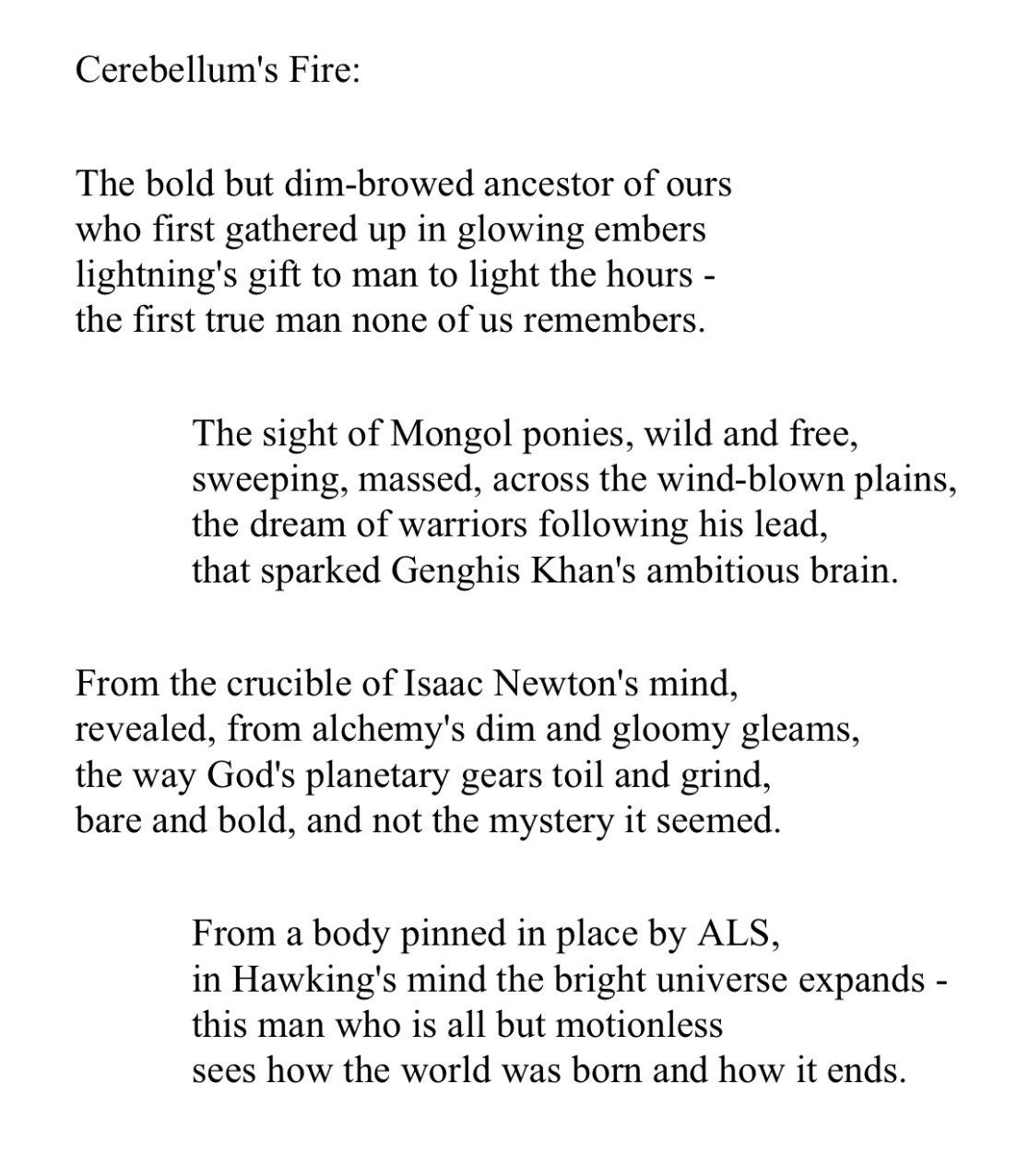
“Cerebellum’s Fire” – Winner of the 2016 Kansas Voices Poetry Award, May 7, 2016. Posted on my blog, Phanaerozoic:

https://phanaerozoic.wordpress.com/2016/05/12/2016-kansas-voices-contest/


“fifteen panes of glass” – 3rd place winner of Zingara Poet 2016 Haiku Contest, Jan 2016:

https://zingarapoet.net/2016/01/24/haiku-contest-winners/


“Stand By Me” – pif Magazine (On-line Journal) Feb 1, 2016

http://www.pifmagazine.com/2016/02/stand-by-me/


“Fables for Children of the North” (Silver Birch Press – Mythic Poetry Series) Oct 28, 2014

https://silverbirchpress.wordpress.com/2014/10/28/fables-for-children-of-the-north-poem-by-roy-j-beckemeyer-mythic-poetry-series/


“At Night in the Southern Rockies”

“Currents”

“Canada Bound”

All three poems excerpted from my book, Music I Once Could Dance To, at the web page We Wanted To Be Writers, Sep 15, 2014

http://wewantedtobewriters.com/2014/09/excerpt-from-roy-beckemeyers-debut-poetry-collection/#.VBbUz6hRwis.facebook


“Lessons”

“Oh, Come Share”

Both appeared on The Light Ekphrastic web site Aug 20, 2014:

http://thelightekphrastic.com/issues/august-2014-issue-19/beckemeyer-and-wood-aug-2014/


“Front doors” – a cinquain published as part of Kansas Poet Laureate Wyatt Townely’s Homewords Project. Published Apr 2014:

http://kansashumanities.org/v2/wp-content/uploads/2014/04/HW_BeckemeyerSchultz.pdf


“Cancion De Amor” – Kansas Humanities Pin-up Poetry, April 2014

https://uk.pinterest.com/pin/550424385680146433/?from_navigate=true

“Lincoln’s Horse” – Kansas Humanities Pin-up Poetry, April 2014

https://uk.pinterest.com/pin/550424385680268124/

“For a Distant Friend” – Kansas Humanities Pin-up Poetry, April 2014

https://www.pinterest.com/pin/550424385680146430/

“Prayer of Letting Go” – Kansas Humanities Pin-up Poetry, April 2014

https://www.pinterest.com/pin/550424385680146415/

“Under the cold moon” – haiku – Kansas Humanities Council Pin-up Poetry, April 2014

https://www.pinterest.com/pin/550424385680119958/

“Hymnal” – Kansas Humanities Council Pin-up Poetry, April 2014

https://www.pinterest.com/pin/550424385680153894/


“Train Sounds” – Straylight Magazine On-line, April 28, 2014

http://straylightmag.com/archives/4944


“Lessons”

“Tree Shadows”

Both at my entry on Map of Kansas Literature

http://www.washburn.edu/reference/cks/mapping/beckemeyer/index.html


“Oceans of Kansas” Feb 24, 2014, Kansas Time + Place

https://150kansaspoems.wordpress.com/2014/02/24/oceans-of-kansas-by-roy-beckmeyer/

“Initiation Song from the Prairie” Dec 2, 2013, Kansas Time + Place

https://150kansaspoems.wordpress.com/2013/12/02/initiation-song-from-the-prairie-by-roy-j-beckemeyer/

“Encore” Aug 11, 2014, Kansas Time + Place

https://150kansaspoems.wordpress.com/2014/08/11/encore-by-roy-beckemeyer/

“After the Storm” Mar 3, 2014, Kansas Time + Place

https://150kansaspoems.wordpress.com/2014/03/03/after-the-storm-by-roy-beckemeyer/

“KaSantatieh” Feb 11, 2013, Kansas Time + Place

https://150kansaspoems.wordpress.com/2013/02/11/ka%C2%B7santatieh-by-roy-beckemeyer/

“A Kansas Farmwife’s Snow Song” Nov 19, 2011, Kansas Time + Place

https://150kansaspoems.wordpress.com/2011/11/19/a-kansas-farmwifes-snow-song/

“We Discuss the Geomorphology of Life” Apr 5, 2011, Kansas Time + Place

https://150kansaspoems.wordpress.com/2011/04/05/43/


“In Kansas to Stay” Kansas Poems

http://www.kansaspoets.com/ks_poems/Kansas%20Poems%20-%20Page%205.htm#in_kansas
2016 Kansas Voices Contest

Pleased to report that my poems, “Staying Warm,” and “Cerebellum’s Fire,” won first place in the Free Verse and Traditional Poetry categories, respectively, in the 27th Annual Kansas Voices Writing Contest. “Cerebellum’s Fire” also took the Overall Award for Poetry.


image   – Roy Beckemeyer

Interview Conducted for Kansas Public Radio by Kaye McIntyre Aired September 20, 2015

During the Kansas Notable Book Awards, Kaye McIntyre of Kansas Public Radio interviewed the Notable Book Awardees including yours truly. Here is the link to the program, which aired on September 20, 2015.

KPR PRESENTS KANSAS NOTABLE BOOKS 2015 (PART 2)

My interview and reading occurs about 35 minutes into the program.


  • Roy Beckemeyer

Interview in The Active Age

Check out Amy Houston’s interview covering my 2015 Kansas Notable Book Award.

THE ACTIVE AGE

4th Printing of “Music I Once Could Dance To”

My poetry book, “Music I Once Could Dance To,” published last year by Coal City Press, is now in its fourth printing. We have added a note about the book having been selected as a 2015 Kansas Notable Book.

Front-Cover-4th-Printing

I will be reading from the book at the Kansas Book Festival in Topeka on September 12th. My reading takes place at 2:00pm.

Kansas Book Festival 2015

Please come and join in the festivities.

  • Roy Beckemeyer, Aug. 27, 2015


Another Place in this World a Woman Can Walk

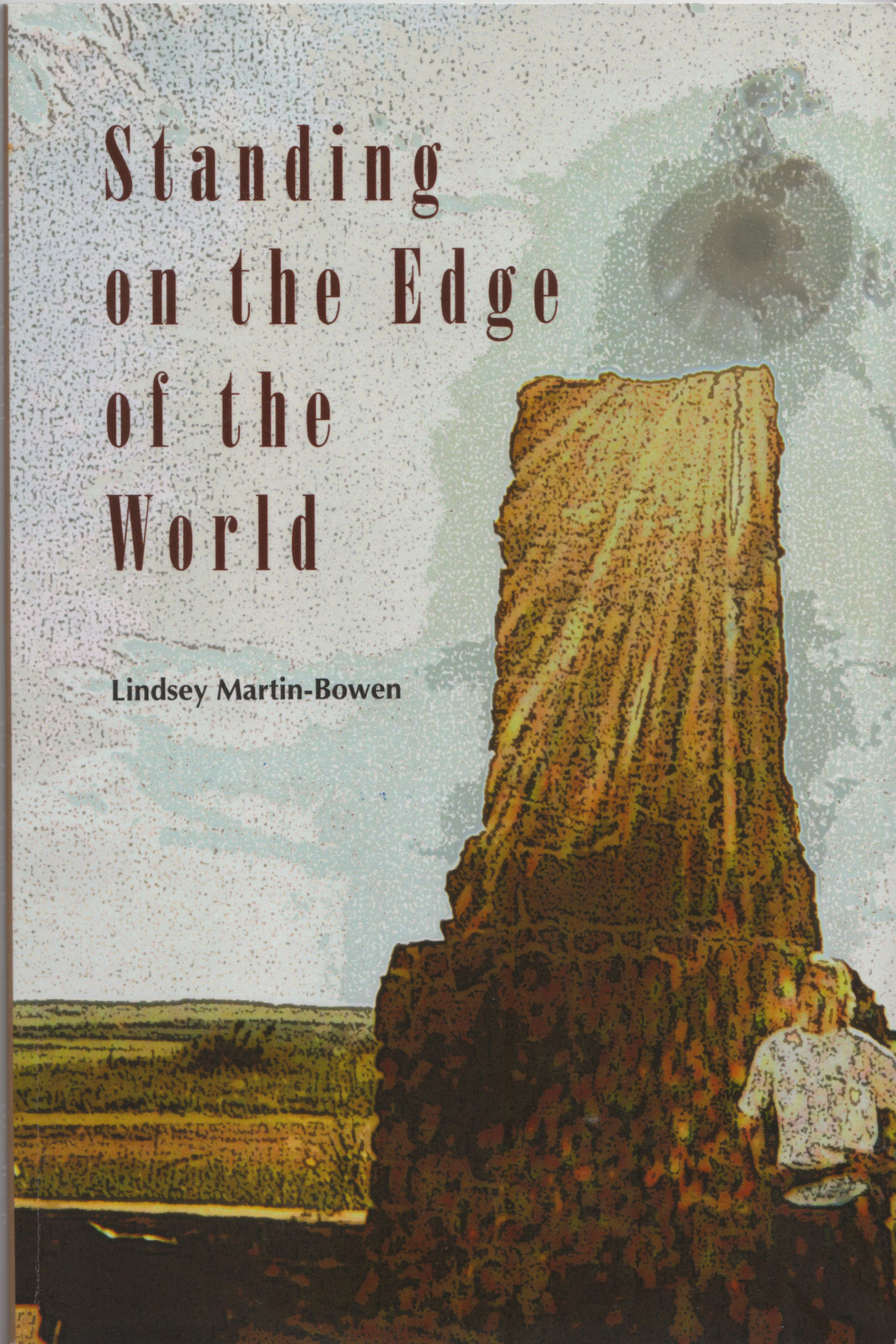
Standing on the Edge of the World Cover

Review of the poetry book:

Standing on the Edge of the World by Lindsey Martin- Bowen, 2008, Woodley Memorial Press, Topeka, KS, ISBN 978-0-939391-44-8, 92 pp., $10.00

“The night is Dresden…” reads the opening line of Lindsey Martin-Bowen’s poem, Working Toward the Last Line, as she compares the arcing flashes, sparks, and chaos of downed tree limbs and power lines in a raging Kansas ice storm to a WWII firestorm. She uses such apt but unexpected allusions throughout this book, enriching her poems and expanding our perception of her poetic vision. This is work of sumptuous insight and surprising conjunctions. In one of my favorite poems in this book, Hanging Out in the Student Center, Martin-Bowen juxtaposes Lorca, Caravaggio, Borges, and Ferlinghetti, who comprise a strange enough crowd in themselves, then places them against the streets and landmarks of Kansas City Missouri: Troost Avenue, Swinney Gym, Country Club Plaza. And, by God, they all seem to belong there; you find yourself wanting her to text you so you can follow her down those streets the next time she gets them all together.

Martin-Bowen is as effective in making magic of our prosaic small town back yards (“…an old tire swing moans empty,” from Dancing with Aunt Virginia) as she is in showing us the wonders of the world. Here is how she sees classic Italian statues: “…I think about / how Michelangelo freed their forms, / how their eyes have no pupils. / They stare into the future / without flinching / and show no regret.” (from the poem Statues).

The book is divided into four sections: Seasonscapes, Another Place in this World a Woman Can Walk, Two Brown Bears Dancing, and Beyond the Vanishing Point. There are rich gifts to be found in each section, but I wish to focus next on some of the poems that appear in the last.

I am particularly attracted to the way in which Martin-Bowen can bring Biblical characters to life with layered depth and fierce vitality. Peter’s Wife asks: “How could you abandon me for a man? / … you won’t live in Capernaum again. / You won’t fish again. You won’t drink again. / We’ll no more share our strange sin, / this earthy love.”

And listen as myrrh-bearer Mary Magdalen Rebukes Peter: “… / At our gatherings, / you boast of your loyalty / and call me a whore / who will destroy him. / But he knows your game: / when I wail at his grave, you will / deny you walked with him, / deny you slept with him, / deny you knew his name.”

In The Madonna she captures the essence of all the lovely Marian icons we have ever seen “… / I shiver above flames / in tiny red and blue jars / … / My son stepped through fire. / It darted from the eyes of throngs / that had fanned him with palms / the week before… / …I give off no sweet scent. / It’s the candles’ perfume that fills the nostrils / of seekers who fall prostrate. / Far from my fingers, they bend / too low to touch.”

Pick up a copy of Lindsey Martin-Bowen’s book. Read it. Here are words that will remind you what an exquisite combination we humans are of the spiritual, the passionate, the proud, and the profane. Hers is the work of a perceptive and extraordinary poet.

– Roy Beckemeyer, 24 June, 2015

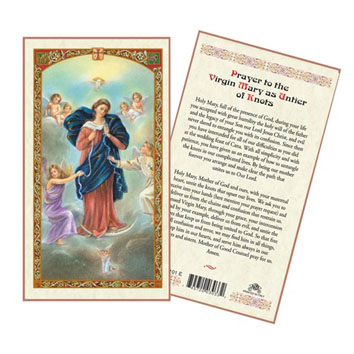
Prayer Card Poems – To the Virgin Mary as Un-tier of Knots

Untier of Knots copy

Dearest Mary,

I have really done it this time,
knotted myself up in rhyme.
I tried to return from the road of sin,
then went and hogtied myself again.

Half-hitched my legs together once more.
Yes, I know, the last time I swore
I would carry my knife, cut the knots through,
but sorrow and strife has me back here with you.

Square knot and granny,
there are so darned many
knots that I thought I knew
how to untie, but here I lie
can’t untie them and so I chew
and twist, and break fingernails.
Everything I try, it seems, fails.

Oh Mary, I dearly need your aid.
So please untie these knots so I
can become one of the saved.

– Roy Beckemeyer

I know that Catholics have a lot of things for which they ask the Mother of God to intercede with her Son for them, but this was a new one for me. So I could knot resist trying my hand at this poem/prayer. Back during my stint in the Boy Scouts I could have used help from the Saint of Tying Knots, but didn’t then and don’t now know who that is. Back to google, I guess.

Prayer Card Poems – In Loving Memory

In Loving Memory

In Loving Memory

Size seems about right. It’ll fit in anyone’s shirt pocket so they will be able to carry it around, run it through the laundry by accident, and then finally forget me, wash off any residual grief. Symbol has me stumped. Jayhawk, WuShock, Flying Billikin, maybe an airplane or a dragonfly or a corkscrew. Yeah, let’s go with the dragonly. It looks sort of like a cross and will be both natural, fitting, and as close to religious as I got. Should the photo be studious or serious or happy? I don’t know, but I think I would like a shit-eating grin (forgive me, Father) so everyone who looks at it wonders what I was up to. I would like to write the poem, and since I don’t know when I will be needing the card, let me do the custom text now:

Small town boy met small town girl raised
small town kids hiked and travelled and
moved to the city and built airplanes and
made wine and square danced and acted
pretty much like an adult most of the time
and then like a kid for the rest of the time
and was in love for nearly the whole time
and right up to the end for sure and went
to church as a kid and young man and hopes
and prays that won’t keep him out of heaven
since he did try to be and do good but that
doesn’t work according to some theologists
and so pray for him if you think it might do
some good, ya’ll, if you want to and have
the time, otherwise don’t worry. Amen.

And please look through those 1500 images in 20 different categories and find a nice picture of the sky. I always liked sky pictures, and there was sky everywhere I ever went.


– Roy Beckemeyer

Theotokos


“Her eyes are darker than the deep cathedrals,
her words come dressed as mourners.”
– T
homas Merton, from the poem
“In Memory 
of the Spanish Poet Frederico García Lorca”

Her eyes are darker than the deep cathedrals

Words dressed as mourners
are poised on her lips. She pouts
a bit, a quiver wavering. She
contemplates hiding her face
in the gold leaf of His halo.
But she cannot take her eyes off us.
She stares. “It is you, and you,
and you, too – all of you who
will use this Child.”

She cannot take her eyes off us.
She avoids looking to the side.
The lance, the nails, held
in the hands of those angels,
are nothing compared with
the pierce of her gaze.

Her eyes may hold tears
somewhere in their depths,
tears welling up, a reservoir
of tears shimmering blackly,
but she does not share them
with us. She just watches and
stares, drawing out our souls,
pulling us into the nave,
the transept, the arched
and domed depths of her face,
into her eyes, dark as cathedrals.

– Roy Beckemeyer

When I first read those powerful lines in Thomas Merton’s poem, “In Memory of the Spanish Poet Frederico García Lorca,” they called to my mind a religious print, “Our Mother of Perpetual Help,” that had hung on the wall of our home when I was a child. Merton’s poem did not, of course, make reference to Mary, mother of Christ, but the images seemed too special and appropriate to her to let them go. In addition to using the lines as a quote to introduce my poem, I borrowed them, the 2nd directly for the 1st line of my poem, and the 1st paraphrased in the last line. I hope that Merton would not have been offended by this.

Images of the Virgin Mary, called Theotokos (“Bearer of God”) icons – are of special importance in the Orthodox and Roman Catholic churches. This famous icon, titled Our Lady of Perpetual Help, was painted by an unknown 15th Century Post-Byzantine artist of the Cretan school. The original wooden icon measures 17″ × 21″ inches and is painted on hard nut wood with a gold leaf background. The image depicts the Virgin Mary wearing a dress of dark red, representing the Passion of Jesus, with a blue mantle, representing her perpetual virginity, and cloaked veil, which represents her pure modesty. On the left side is the Archangel Michael, carrying the lance and sponge of the crucifixion of Jesus. On the right is the Archangel Gabriel carrying a 3-bar cross used by Popes at the time and nails. This type of icon is also called a Hodegetria (literally: “She who shows the Way”) composition, where Mary is holding the Child Jesus at her side while pointing to Him as the source of salvation for mankind.

Thomas Merton (1915-1968) was a Trappist monk and one of Catholicism’s most prolific and respected modern apologist authors. Merton wrote more than 70 books, mostly on spirituality, social justice and pacifism; he also wrote many essays, poems and reviews. His best-selling autobiography, The Seven Storey Mountain (1948), was featured in National Review’s list of the 100 best non-fiction books of the 20th century.

Merton

Spanish Moss and Mooonlight

Spanish MossR2

The shape on paper was hers,
light pencil tracings
of the first ideas
of how the moss would hang
in front of the moon,
the humid haze would hover
in the luxuriant Louisiana sky.

Now he was shaping it
in three dimensions,
his fingers and hands
working together, centering,
centering, pressing, smoothing
the Lake Pontchartrain clay;
his strong left leg powering
the treadle, the wheel spinning,
the vase rising into an almost
living, an almost organic form
from a shapeless lump of earth.

“Pinch in the neck,” she said,
“there above that rounded shoulder
that suggests the tops
of the trees – constrict the clay
into a sharply defined ring,
a cylindrical edge that will
pronounce: Here is a vase –
a form with a hollowness,
with emptiness, inside it.”

“Oh,” she said, “the blue and pale
lighted circle of trees
I have in mind will hold
within that hollow space
where all vases hide
their secrets, the mystery
of moonlit nights and bayous.”

She carries off the greenware,
places it on her turntable
and begins to shave off
strips of clay, layers of clay,
snippets of clay that drop
to the workbench, leaving strands
of moss to fall from the trees.

As clay curls off the edge
of her embossing knife,
the live oaks and bald cypress
rise, their branches woven,
and everywhere the Spanish moss,
drapes, droops, caresses
the tree forms, bounds
the growing image from above
the way bayou trees frame
the southern night skies.
With the first firing, the vase turns
white as the fullest moon,
ready for the glaze. The blues,
pale, paler, palest,
separate sky and foliage,
shape and void,
turn black bayou waters
into a moonlit blue sheen,
mark the sky for radiance
with flowing silken glaze.
The trees across the water loom
upward, reaching, reaching,
and the round moon hides
behind fingers of moss,
the deepest blue moss,
moss that loves live oaks
and warm nights and calling owls
and chirping tree frogs.

And then the final fire, the kiln blazing,
clay and glazes merging, capturing
in the chemistry of ceramics and heat
a moment of time, making it
a piece of forever, burning
into reality an imagining
of shape and form and color
and shadings. Oh, yes, here is what
she saw before she began to sketch.
And here is what his fingers felt
before he took up the clay. Here
is what they made, together,
from earth and fire and memories,
from Spanish moss, from live oaks,
from moonlight.

– Roy Beckemeyer


This is an ekphrastic poem inspired by a Newcomb Pottery vase thrown by Joseph Meyer and deeply carved by artist Sadie Irvine with live oak trees and Spanish Moss in front of a full moon. The vase, pictured above, was made in 1919.